
Introduction
Understanding face shape helps people choose hairstyles, glasses, makeup styles, beard designs, and fashion accessories that match their appearance. Face shape identification is based on measurements and proportions. Many people misunderstand their face shape because they focus on one feature instead of the full structure of the face.
Learning how to identify your face shape is useful for personal styling, grooming, photography, and beauty decisions. This guide explains face shape analysis step by step using simple methods that anyone can follow at home.
Why Face Shape Matters
Face shape affects how hairstyles, glasses, hats, and facial hair look on a person. Different cuts and designs change the balance of facial features. Knowing your face shape helps you make better style choices.
Face shape analysis is commonly used in:
- Hair salons
- Makeup consultations
- Fashion styling
- Beard grooming
- Eyewear fitting
- Photography planning
Many online beauty tools also use face shape recognition to recommend styles.
What Is a Face Shape?
Face shape refers to the outline and structure of the face based on:
- Forehead width
- Cheekbone width
- Jawline shape
- Face length
The combination of these measurements creates a specific facial pattern. Most people fit into one main face shape category, while some people have mixed features.
Main Face Shape Categories
The most common face shapes include:
- Oval
- Round
- Square
- Heart
- Diamond
- Rectangle
- Triangle
Each shape has its own proportions and facial structure.
Step-by-Step Guide to Identify Your Face Shape
Step 1: Pull Hair Away From the Face
Tie your hair back so the full outline of your face is visible. Make sure ears, forehead, and jawline can be seen clearly.
Good lighting helps you notice the shape correctly.
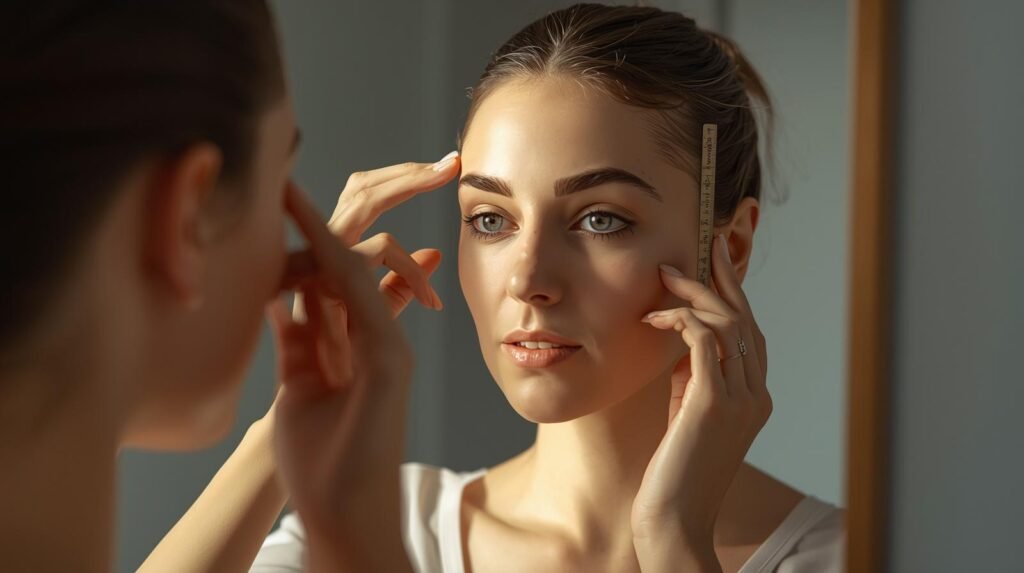
Step 2: Look Straight Into a Mirror
Stand in front of a mirror and keep your head straight. Avoid tilting your face because it changes proportions.
You can also take a front-facing photo for better analysis.
Step 3: Measure Your Face
Use a measuring tape or ruler to record:
Forehead Width
Measure across the widest part of the forehead.
Cheekbone Width
Measure from one cheekbone to the other.
Jawline Width
Measure from the tip of the chin to below the ear and multiply by two.
Face Length
Measure from the center of the hairline to the tip of the chin.
Step 4: Compare Measurements
After measuring, compare proportions:
- Longer face length often indicates rectangle or oval shapes
- Equal width and length often suggest round or square shapes
- Wider forehead with narrow chin often suggests heart shape
This comparison helps identify the closest match.
Oval Face Shape
An oval face shape is considered balanced because proportions are evenly distributed.
Features of an Oval Face
- Face length is longer than width
- Jawline appears rounded
- Forehead is slightly wider than jaw
- Chin has a curved appearance
People with oval faces can usually wear many hairstyle types because the face has balanced proportions.
Round Face Shape
Round faces have soft curves with similar width and length.
Features of a Round Face
- Full cheeks
- Rounded jawline
- Similar width and height
- Minimal sharp angles
Round faces often appear wider near the cheeks.
Square Face Shape
Square faces have strong jawlines and equal proportions.
Features of a Square Face
- Wide forehead
- Sharp jawline
- Equal face width and length
- Straight sides of the face
This face shape has noticeable angles around the jaw area.
Heart Face Shape
Heart-shaped faces are wider at the forehead and narrower at the chin.
Features of a Heart Face
- Broad forehead
- Narrow chin
- High cheekbones
- Tapered jawline
This shape often resembles an inverted triangle.
Diamond Face Shape
Diamond faces are narrow at the forehead and chin with wider cheekbones.
Features of a Diamond Face
- Wide cheekbones
- Narrow forehead
- Pointed chin
- Defined facial structure
Diamond faces are less common compared to oval or round shapes.
Rectangle Face Shape
Rectangle faces are longer than they are wide.
Features of a Rectangle Face
- Long face structure
- Straight cheek lines
- Strong jawline
- Similar forehead and jaw width
This shape is also called an oblong face shape.
Triangle Face Shape
Triangle faces have a wider jawline and narrower forehead.
Features of a Triangle Face
- Broad jaw
- Narrow forehead
- Defined chin area
- Lower face appears wider
This face shape creates a strong lower facial structure.
Using Photos to Identify Face Shape
Photos help because they freeze facial proportions. Follow these tips:
- Use front-facing angles
- Avoid filters
- Keep hair away from the face
- Use natural lighting
Mobile phone cameras can work well for face shape analysis.
Face Shape Detection Using Mobile Apps
Many mobile apps use facial recognition technology for face shape analysis.
Popular features include:
- Automatic measurements
- Hairstyle suggestions
- Glasses recommendations
- Beauty filters
These apps compare facial proportions using AI systems.
Online Face Shape Detection Tools
Online face shape tools allow users to upload a photo for analysis.
These tools examine:
- Facial symmetry
- Width ratios
- Jawline structure
- Forehead proportions
Some websites provide detailed reports based on uploaded images.
Manual Face Shape Detection vs AI Tools
Manual Analysis
Advantages:
- No app required
- More personal observation
- Better understanding of facial structure
Disadvantages:
- Human error
- Incorrect measurements
- Lighting issues
AI-Based Detection
Advantages:
- Fast results
- Automatic measurements
- Consistent analysis
Disadvantages:
- Camera distortion
- Poor photo quality
- Inaccurate detection with angles
Both methods can help when used correctly.
Common Mistakes in Face Shape Analysis
Many people identify the wrong face shape because of common errors.
Ignoring Face Length
Some people only focus on jawline or cheeks. Face length is one of the most important measurements.
Using Angled Photos
Tilted selfies distort proportions and create inaccurate analysis.
Confusing Weight With Face Shape
Weight changes facial fullness but does not always change bone structure.
Not Measuring Properly
Incorrect measurements lead to false results.
Always measure carefully.
Copying Celebrity Face Shapes
Many people compare themselves with celebrities instead of checking actual facial proportions.
This method is unreliable.
How Hairstyles Affect Face Shape Appearance
Haircuts can change how the face appears.
Examples include:
- Layers can soften square faces
- Side parts can reduce roundness
- Long styles can lengthen short faces
- Bangs can reduce forehead width
Hairstyles create visual balance.
Best Glasses for Different Face Shapes
Eyewear often depends on facial proportions.
Oval Face
Most frame styles work well.
Round Face
Angular frames create definition.
Square Face
Rounded frames soften facial lines.
Heart Face
Frames with wider bottoms balance the face.
Rectangle Face
Tall frames reduce face length appearance.
Makeup and Face Shape
Makeup artists use contouring techniques based on face shape.
Examples include:
- Highlighting cheekbones
- Reducing forehead appearance
- Defining jawlines
- Balancing proportions
Face shape analysis helps makeup placement.
Beard Styles and Face Shape
Facial hair can change appearance.
Round Face
Longer beard styles can create definition.
Square Face
Shorter beard styles soften jawlines.
Oval Face
Many beard styles fit balanced proportions.
Rectangle Face
Fuller sides reduce long face appearance.
Face Shape and Photography
Photographers use face shape knowledge to improve portraits.
Important factors include:
- Camera angle
- Lighting direction
- Hair positioning
- Head tilt
Correct posing changes facial balance in photos.
Face Shape Changes Over Time
Face shape can appear different due to:
- Aging
- Weight changes
- Facial hair
- Hairstyles
- Swelling
- Medical treatments
Bone structure usually remains the main factor.
Facial Symmetry and Face Shape
Symmetry refers to how evenly facial features align on both sides.
Perfect symmetry is rare. Minor differences are normal.
Face shape analysis focuses more on proportions than perfect balance.
How Professionals Analyze Face Shapes
Professionals use:
- Measurement tools
- Facial mapping
- Photography analysis
- Digital software
Beauty consultants and hairstylists often combine manual observation with digital analysis.
Tips for Accurate Face Shape Detection
Follow these tips for better results:
- Use natural lighting
- Keep facial expression neutral
- Remove glasses
- Pull hair back
- Use straight camera angles
- Compare all measurements carefully
Repeating measurements can improve accuracy.
Why Many People Have Mixed Face Shapes
Some faces combine features from multiple categories.
Examples include:
- Oval-round
- Square-rectangle
- Heart-diamond
This happens because facial proportions vary between individuals.
Face Shape Myths
Myth 1: Only One Face Shape Exists
Many people have blended characteristics.
Myth 2: Face Shape Never Changes
Weight and aging can change appearance.
Myth 3: Online Tools Are Always Accurate
Poor image quality affects results.
Myth 4: Hairstyles Only Depend on Trends
Face proportions influence hairstyle balance.
Benefits of Knowing Your Face Shape
Understanding face shape helps with:
- Haircut selection
- Glasses shopping
- Makeup placement
- Beard grooming
- Fashion styling
- Photography preparation
It improves personal styling decisions.
Conclusion
Learning how to identify your face shape is useful for styling, grooming, and fashion choices. By measuring forehead width, cheekbones, jawline, and face length, people can determine their facial structure more accurately.
Different face shapes such as oval, round, square, heart, diamond, rectangle, and triangle each have unique characteristics. Manual analysis and AI-based tools both help identify facial proportions when used correctly.
Avoiding mistakes like poor measurements, angled photos, and focusing only on one feature improves accuracy. Understanding face shape allows people to choose hairstyles, glasses, makeup techniques, and beard styles that create balanced facial proportions.
Face shape analysis is not about changing appearance. It is about understanding facial structure and using that knowledge for better styling decisions.